India's number 1 choice for Mutual Fund Distributors
Become a Mutual Fund Distributor (MFD) today!
Want to become a mutual fund distributor in India? Learn the step-by-step process — NISM exam, ARN registration, AMC empanelment, and how to earn ₹50,000/month. Start with ZFunds today.
14,000+
Distributors
All
Mutual Funds
1,000+
Locations
1,00,000+
Customers Served
Start MFD Business at ZERO COST in 2 mins
By clicking on button you agree with Privacy Policy and Terms of use. You also agree to get notifications on WhatsApp
14,000+
Distributors
All
Mutual Funds
1,000+
Locations
1,00,000+
Customers Served
How to become ZFunds Mutual Fund Distributor in just 3 simple steps!
Step 1
Sign Up on ZFunds
Sign up on ZFunds with basic information
Complete your KYC and document verification
Step 2
Clear the NISM VA Exam
Get guidance and study material from ZFunds
Appear for the NISM VA certification exam
2 online and offline classes every month
Step 3
Get Your ARN and Start MFD!
Receive your AMFI Registration Number (ARN)
Start onboarding clients and build mutual fund business
Why should you become mutual fund distributor?
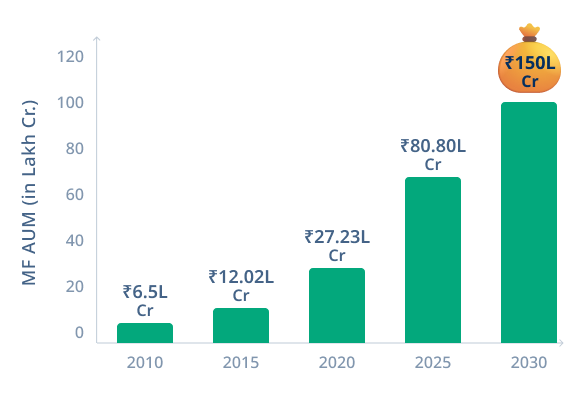
India’s MF industry grew from ₹12L Cr to ₹80.80L Cr AUM in 10 years, aiming for ₹150L Cr+ by 2030! Yet, 2L MFDs serve just 5.5 Cr investors—1 MFD per ~267 investors in a 147.04 Cr population.
147.04 Crores
Indian Population
5.5 Crores
Mutual Fund Investors
1.78 Lakhs+
Mutual Fund Distributors
200%
Industry Growth in Last 5 years
Source: Worldometers, AMFI
₹150 Lakh CroresExpect to grow by 2030:
Source: NISM(As on December 2025)
Loading...
Loading...
Loading...
Loading...
Loading...
Loading...
A mutual fund distributor (MFD) is a person or organisation that helps investors invest in mutual fund schemes and provides support throughout their investment journey.
But being a mutual fund distributor is much more than simply selling mutual funds.
A good MFD helps investors understand different mutual fund categories, assess their financial goals and risk profile, complete the investment process, track portfolios, and stay disciplined during market ups and downs.
For people who want to build a career or business in financial services, mutual fund distribution can be an attractive opportunity because the business can generate recurring trail income as the client portfolio grows.
In this guide, we will explain what a mutual fund distributor is, what an MFD does, how mutual fund distributors earn, eligibility requirements, the NISM exam, ARN registration, the difference between an MFD and an investment advisor, and how to start a mutual fund distribution business in India.
What is a Mutual Fund Distributor?
A Mutual Fund Distributor (MFD) is an individual or organisation that distributes mutual fund schemes to investors and helps them complete and manage their mutual fund investments.
In simple words, an MFD acts as a bridge between an investor and mutual fund companies.
A distributor can help an investor with:
Understanding different mutual fund categories
Selecting schemes based on the investor's requirements
Completing KYC and investment formalities
Starting SIPs and lump-sum investments
Tracking mutual fund portfolios
Reviewing investments periodically
Understanding market-related risks
Handling transactions and service requests
Staying invested for long-term financial goals
Mutual fund distributors are part of the distribution ecosystem regulated through the applicable SEBI and AMFI framework.
For an individual to become a mutual fund distributor, the NISM Series V-A certification and AMFI registration/ARN requirements are important parts of the process.
What Does a Mutual Fund Distributor Do?
The role of an MFD does not end after an investor buys a mutual fund.
A professional mutual fund distributor works with clients throughout their investment journey.
1. Understand the investor
Before suggesting any mutual fund, an MFD should understand the investor's:
Financial goals
Investment horizon
Risk appetite
Existing investments
Income and savings pattern
Liquidity requirements
The objective should be to help investors choose investments that are suitable for their requirements rather than simply selling a particular scheme.
2. Explain mutual fund options
There are different types of mutual funds, including:
Equity funds
Debt funds
Hybrid funds
Index funds
ELSS funds
Liquid funds
Solution-oriented funds
Other specialised categories
An MFD helps investors understand the basic characteristics, risks and suitability of different categories.
3. Help investors start investing
A distributor can help clients complete the required onboarding and investment process, including KYC, SIP registration and other transaction-related requirements.
Digital platforms have made this process considerably easier compared with the traditional paperwork-heavy process.
4. Provide ongoing service
Markets go through different cycles.
Investors may become worried when markets fall or become overconfident when markets rise. An MFD can help clients understand what is happening and maintain a disciplined approach to long-term investing.
This ongoing relationship is one of the biggest differences between simply selling a financial product and building a sustainable mutual fund distribution business.
Differences Between MF Distributors, Advisors, Investment Advisors, and Fund Managers
The financial industry includes various professionals who play distinct roles in managing investments. Here's a comparison of mutual fund distributors, mutual fund Advisors, investment advisors, and fund managers:
Aspect
MF Distributors
Mutual Fund Advisors
Investment Advisors
Fund Managers
Primary Role
Sell mutual funds
Advise clients on mutual fund investments
Provide comprehensive financial advice
Manage fund portfolios
Focus
Mutual fund products
Mutual fund selection and strategy
Overall financial planning
Fund performance
Compensation
Commission-based
Fee and commission-based
Fee-based
Salary plus performance bonus
Regulation
AMFI registered
AMFI registered
SEBI registered
SEBI regulated
Client Interaction
High
High
High
Limited
Expertise
Product knowledge
In-depth knowledge of mutual funds
Broad financial knowledge
In-depth market analysis
Certification
NISM-Series V-A
NISM-Series V-A
NISM-Series X-A
Various (CFA, MBA, etc.)
Decision Making
Recommends funds
Recommends and advises on mutual funds
Advises on overall strategy
Makes investment decisions
Scope of Service
Limited to mutual funds
Focused on mutual fund investments
All investment types
Specific fund management
Fiduciary Duty
To AMC
To client
To client
To fund investors
How Does a Mutual Fund Distributor Earn Money?
This is one of the most important questions for anyone considering an MFD career.
Mutual fund distributors generally earn trail commission linked to the assets they distribute and service, subject to the applicable scheme and regulatory framework.
This means that building a mutual fund distribution business is different from a conventional one-time sales job.
The long-term opportunity comes from building and retaining a growing client AUM.
For example, suppose an MFD builds a ₹5 crore client portfolio and the applicable average trail rate across that portfolio is 0.70% per year.
The approximate annual trail would be: ₹5 crore × 0.70% = ₹3.5 lakh per year
That works out to approximately: ₹29,167 per month
This is only an illustration. Actual mutual fund commission rates can vary significantly depending on the mutual fund scheme, category, applicable arrangements, and regulatory rules.
Therefore, an MFD should focus on building a quality and sustainable client portfolio rather than chasing a particular monthly income number.
Does a Mutual Fund Distributor Get Paid Every Month?
Trail-based income can provide recurring earnings as long as eligible assets remain invested and the applicable trail continues. This is why mutual fund distribution can become a scalable business.
For example:
Client AUM
Illustrative Trail Rate
Approx. Annual Trail
Approx. Monthly Equivalent
₹25 lakh
0.70%
₹17,500
₹1,458
₹50 lakh
0.70%
₹35,000
₹2,917
₹1 crore
0.70%
₹70,000
₹5,833
₹5 crore
0.70%
₹3.5 lakh
₹29,167
₹10 crore
0.70%
₹7 lakh
₹58,333
These figures are examples for understanding mathematics and should not be treated as guaranteed income.
Your actual earnings can vary based on the portfolio's scheme mix, applicable commission rates, asset movement, client retention, and other factors.
Is Mutual Fund Distribution a Profitable Business?
It can be but it is important to understand what actually drives profitability. A mutual fund distributor's business grows primarily through: New clients + existing client retention + increasing AUM + quality service
An MFD who acquires clients but does not service them properly may struggle to build a sustainable business.
On the other hand, an MFD who develops long-term relationships can potentially build a recurring revenue stream over time.
The MFD business can be especially attractive for people who already have strong relationships in their community, professional network or local market. However, there is no guaranteed income.
The first few months may involve more effort in acquiring clients, educating investors and building trust than in generating significant revenue.
How to Become a Mutual Fund Distributor in India
Becoming a mutual fund distributor involves a NISM VA certification and registration process.
Step 1: Understand Mutual Funds
Before entering the business, learn the fundamentals of:
A distributor should be able to explain these concepts in simple language.
Step 2: Clear the NISM Series V-A Examination
The NISM V-A: Mutual Fund Distributors Certification Examination is an important requirement for individuals entering mutual fund distribution. You can prepare using the nism va study material and mock tests.
Clearing the exam demonstrates that you have the basic knowledge required for mutual fund distribution.
Step 3: Apply for an ARN
After meeting the certification requirement, the next important step is obtaining your AMFI Registration Number (ARN).
The ARN number identifies the mutual fund distributor within the mutual fund distribution ecosystem.
The exact documentation, fees and registration requirements should always be checked against the latest AMFI requirements before applying.
Step 4: Complete the Required Verification
The distributor may need to complete the applicable Know Your Distributor (KYD) and verification requirements.
This helps establish the identity and credentials of the distributor.
Step 5: Get Empanelled With AMCs or Join a Distribution Platform
Once the registration process is completed, an MFD needs access to mutual fund schemes to serve clients.
You can work with individual AMCs or use a mutual fund distribution platform that provides access to multiple fund houses through one technology platform.
For a new distributor, a platform can reduce the operational burden of managing multiple relationships, transactions and client portfolios separately.
Step 6: Start Building Your Client Base
This is where the real business begins.
Getting the ARN is the beginning not the end of becoming a successful mutual fund distributor.
Your long-term success depends on your ability to:
Find the right clients
Understand their requirements
Explain investments clearly
Provide consistent service
Retain existing clients
Build referrals
Grow AUM responsibly
Who Can Become a Mutual Fund Distributor?
You do not necessarily need to be a finance graduate to become an MFD.
People from different professional backgrounds can explore mutual fund distribution provided they meet the applicable certification, registration, and regulatory requirements.
This can include:
Finance professionals
Insurance professionals
Bankers
Chartered accountants
Business owners
Working professionals
Retired professionals
Entrepreneurs
People looking to build a financial services business
What matters most is your willingness to learn, communicate with investors, and build long-term relationships.
Skills Required to Become a Successful Mutual Fund Distributor
Passing the NISM examination can help you meet the knowledge requirement, but certification alone does not make someone a successful MFD.
Financial knowledge
You should understand mutual funds, risk, asset allocation, and basic investment concepts.
Communication
Financial concepts can be complicated. A good distributor should be able to explain them in language that an ordinary investor can understand.
Relationship building
Mutual fund distribution is a relationship-driven business. Clients need to trust the person handling their investments.
Patience
Markets will not always move upward. An MFD needs to help clients remain focused on their financial goals rather than reacting emotionally to short-term market movements.
Sales and networking
You need to continuously build relationships and introduce new investors to the mutual fund ecosystem.
Technology skills
Modern MFDs increasingly use digital onboarding, portfolio tracking, client reporting, online transactions and automated communication.
Technology can allow a distributor to spend less time on repetitive administrative work and more time with clients.
How to Get Your First 10 Clients as a Mutual Fund Distributor
This is something many guides fail to explain.
Getting an ARN is relatively straightforward compared with building your first client base.
Start with people who already know and trust you.
1. Your existing network
Make a list of:
Friends
Family members
Former colleagues
Business contacts
Local professionals
Community contacts
Do not approach everyone with the same product pitch.
Start by understanding their financial goals.
2. Educate instead of selling
Instead of saying: “Invest in this mutual fund.” Start conversations around:
How SIPs work
Why asset allocation matters
How to plan for retirement
How to invest for children's education
Common mutual fund mistakes
How to review an existing portfolio
Education builds credibility.
3. Build a local presence
Many investors still prefer dealing with someone they can speak to directly. An MFD can build visibility through local seminars, investor awareness sessions, WhatsApp communication, social media and referrals.
4. Ask for referrals
A satisfied investor can become one of your strongest sources of new clients. After providing meaningful service, ask existing clients whether they know someone who may also benefit from understanding mutual fund investing.
How Technology Is Changing Mutual Fund Distribution
The traditional MFD used to spend considerable time on paperwork, transaction processing, portfolio statements and follow-ups.
Technology has changed that.
A modern mutual fund distributor can use technology for:
Digital client onboarding
KYC assistance
SIP registration
Portfolio tracking
Transaction processing
Client reporting
Research
Automated communication
Business analytics
Client follow-ups
This is where a technology-driven distribution platform can make a significant difference.
Why MFDs Choose ZFunds?
ZFunds is built to help mutual fund distributors manage their business from one platform.
With ZFunds, distributors can access tools and support designed around the practical challenges of running an MFD business.
Manage clients from one platform
Track client investments and portfolios without relying on multiple systems.
Access multiple mutual fund schemes
Distributors can offer investors access to a broad range of mutual fund schemes through the ZFunds platform.
Digital onboarding
A digital-first onboarding process can reduce paperwork and make it easier for new investors to get started.
Client portfolio tracking
Distributors can monitor client portfolios and provide better ongoing service.
Research and investment support
Access to research and portfolio-related tools can help MFDs spend more time understanding client needs instead of manually collecting information.
Marketing support
New distributors often struggle with client acquisition.
Marketing resources can help MFDs create awareness and generate conversations with potential investors.
Dedicated relationship support
A dedicated support structure can help distributors with operational questions and day-to-day business requirements.
Technology for modern MFDs
ZFunds also provides technology-led tools designed specifically for distributors, including solutions for client management and business growth.
Mutual Fund Distributor vs Going Direct
Investors today can invest in mutual funds through both direct and regular plans.
This raises an obvious question:
Why would someone use a mutual fund distributor?
The answer is service and guidance.
A self-directed investor may prefer researching funds, completing transactions and managing their portfolio independently.
Another investor may prefer having someone explain the options, help with onboarding, review the portfolio and provide ongoing support.
Neither approach is automatically right for every investor.
The important thing is to understand the costs, services and suitability before investing.
What Makes a Good Mutual Fund Distributor?
A successful MFD is not necessarily the person who sells the most mutual funds.
A strong MFD is someone who:
Understands the client's goals
Explains risks honestly
Avoids unnecessary product pushing
Maintains proper records
Provides regular service
Uses technology efficiently
Keeps learning
Builds long-term relationships
Follows applicable regulations and compliance requirements
Trust is one of the most valuable assets in the mutual fund distribution business.
Common Mistakes New Mutual Fund Distributors Make
Focusing only on commission
If the business is built entirely around commission, client relationships can suffer.
A long-term MFD should focus on solving investor problems.
Trying to sell every product
More products do not automatically mean better service.
Understand the client first.
Ignoring existing clients
Acquiring a new client is only one part of the business.
Servicing existing clients and retaining their investments is equally important.
Depending completely on market conditions
A distributor should build a business around financial goals and long-term investing rather than short-term market predictions.
Doing everything manually
As your client base grows, manual processes become difficult to manage.
Technology becomes increasingly important.
Final Thoughts
Becoming a mutual fund distributor is relatively simple to understand on paper: Learn → Clear NISM → Get ARN → Start Distribution → Build Clients → Grow AUM → Provide Long-Term Service
But building a successful MFD business requires much more than obtaining an ARN.
The distributors who create sustainable businesses are the ones who earn the trust of their clients, understand their financial goals, provide consistent service and use technology to manage their growing client base.
If you are planning to start your mutual fund distribution journey, ZFunds can help you move beyond the basic registration process and build the technology, research, client servicing and business infrastructure required to grow as a modern MFD.
Ready to start your mutual fund distribution business? Join ZFunds and take the first step toward building your MFD practice.
FREQUENTLY ASKED QUESTIONS
Who is eligible for a mutual fund distributor?
Who can join the Mutual Fund Distributor business?
Is there any target in this business?
What is the fee for reappearing in the NISM Mutual Fund VA Exam if I fail?
How long does it take to start the mutual fund distribution business?
Who cannot become a Mutual Fund Distributor (MFD)?
Which is platform is best for MF distributors?
How does ZFunds help partners grow their business?
What is the mutual fund distributor exam?
How to get mutual fund distributor (MFD) business license in India?
How to become a mutual fund distributor in India?
Is being a mutual fund distributor a good career?
What skills do I need to become a successful mutual fund distributor?
Can ZFunds partners acquire clients from anywhere in India?
Can mutual fund distributors sell direct plans?
Who pays mutual fund distributors?
Can a salaried person become a mutual fund distributor?
Can I do a part-time mutual fund distributor business along with my existing job or business?
What is the fee for reappearing for the NISM Mutual Fund VA Exam in case of failure?
Are there any limitations in terms of the number of attempts to appear in the NISM Mutual Fund VA exam?
Who distributes mutual funds?
How can I obtain an ARN (AMFI Registration Number) in mutual fund distribution?
Is it profitable to become a mutual fund distributor?
What is the age limit to become a mutual fund partner with ZFunds?
How many days are required to start a mutual fund distributor business with ZFunds?
How does ZFunds support you in growing Mutual Fund Distributor Business?
What is ARN in mutual funds?
What is the duration of the MFD (Mutual Fund Distributor) exam?
Can I shift AUM from one distributor to another?
How much does a mutual fund distributor earn in India?
Do mutual fund distributors earn trail commission?
What is the difference between a Mutual Fund Distributor (MFD) and a Registered Investment Distributor (RIA)?
What is the difference between a mutual fund distributor and a broker?
What is the difference between Mutual fund distributor vs mutual fund advisor?