


Common Mistakes to Avoid During ARN Registration and Renewal
Updated on June 18, 2026
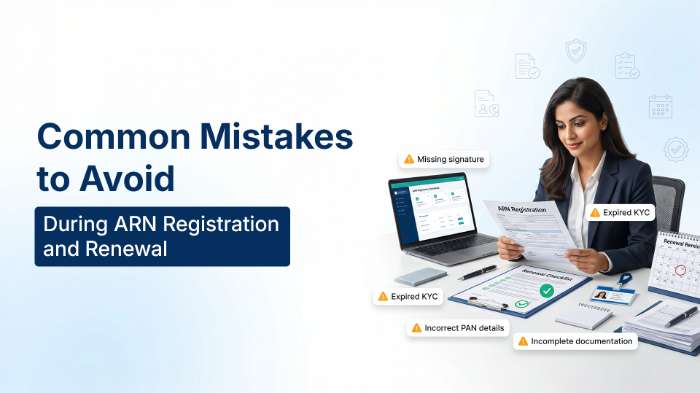
Are you planning to become a mutual fund distributor or renew your ARN? Learn the most common mistakes to avoid during ARN registration and renewal, and ensure a smooth, hassle-free process without delays or rejections.
Get FREE NISM Certification + ARN worth Rs. 5040
By clicking on button you agree with and

Get Updates on WhatsApp and SMS
Introduction
For any individual who wants to start their career as a mutual fund distributor in India, having an ARN (AMFI Registration Number) is very important. Likewise, for the already existing distributors, it is important to renew the ARN regularly so that they can continue working with their clients and earn commission without any problem.
Although the process of registration and renewal of the ARN is very simple, some applicants often make mistakes that unnecessarily delay the procedure or reject the request altogether.
This is because even a little mistake made while filling out the ARN application form can lead to a huge loss of valuable time.
Whether you are new and applying for the first time or you are an expert in mutual fund distribution and want to renew your ARN, learning about the most common mistakes made by candidates will surely help you out.
This article will give detailed information about the mistakes you need to avoid when it comes to registering and renewing the ARN.
What Is ARN Registration?
ARN (AMFI Registration Number) is a unique registration number issued to mutual fund distributors in India after fulfilling eligibility requirements and completing the registration process.
An active ARN Number allows distributors to:
- Distribute mutual fund products
- Partner with Asset Management Companies (AMCs)
- Earn commissions
- Service investor accounts
- Build a professional mutual fund distribution practice
Since ARN validity is not permanent, distributors must also complete ARN renewal before expiration to continue their business activities.
Why ARN Registration and Renewal Matter
Many distributors view ARN registration and renewal as routine administrative tasks.
However, an expired or delayed ARN can have serious consequences.
Potential issues include:
- Interruption in business operations
- Delayed commission payouts
- Difficulties in client servicing
- Compliance concerns
- Loss of business opportunities
That's why avoiding mistakes during ARN registration and renewal is critical.
Mistake 1: Waiting Until the Last Minute for ARN Renewal
One of the most common mistakes among mutual fund distributors is postponing ARN renewal until the final days before expiry.
Many assume the process can be completed instantly.
Unfortunately, delays can occur due to:
- Documentation issues
- Verification requirements
- Payment processing delays
- Application discrepancies
Best Practice
Start the renewal process well before the expiry date. This gives you enough time to address any unexpected issues without affecting business continuity.
Mistake 2: Ignoring NISM Certification Validity
Your ARN renewal often depends on having a valid NISM certification or meeting applicable continuing education requirements.
Many distributors focus only on ARN renewal deadlines while overlooking certification validity.
As a result:
- Renewal applications may get delayed
- Additional documentation may be required
- Processing timelines may increase
Best Practice
Track both ARN validity and certification validity regularly. Maintaining a compliance calendar can help avoid surprises.
Mistake 3: Submitting Incorrect Personal Details
Even minor errors in personal information can create complications.
Common examples include:
- Incorrect spelling of names
- Wrong PAN details
- Mismatched date of birth
- Incorrect address information
- Outdated contact details
Since these details are used for verification, inconsistencies can delay processing.
Best Practice
Double-check every field before submitting the application. Always ensure that details match official records.
Mistake 4: Uploading Incomplete Documents
Incomplete documentation is one of the leading causes of ARN registration delays.
Applicants sometimes upload:
- Missing pages
- Blurred scans
- Incorrect documents
- Expired documents
- Unsupported file formats
Even a single missing document can prevent application processing.
Best Practice
Create a checklist before submission and verify that every required document is uploaded clearly and correctly.
Mistake 5: Not Verifying PAN and KYC Information
PAN and KYC records play a critical role in ARN registration and renewal. Any mismatch between submitted information and official records can create complications.
Examples include:
- Old addresses in KYC records
- Name mismatches
- PAN errors
- Incomplete KYC updates
Best Practice
Review your KYC and PAN details before starting the application process and update any discrepancies in advance.
Mistake 6: Ignoring Communication from Authorities
Many distributors submit applications and assume everything is complete. However, additional clarification requests may sometimes be issued. Ignoring emails or notifications can result in:
- Delayed approvals
- Application holds
- Additional processing time
Best Practice
Monitor your registered email address regularly throughout the registration or renewal process. Respond promptly to any requests.
Mistake 7: Using Outdated Contact Information
A surprisingly common issue is outdated contact details. If your email address or mobile number has changed but records have not been updated, important notifications may never reach you.
This can lead to:
- Missed renewal reminders
- Delayed communication
- Compliance issues
Best Practice
Keep your contact information updated at all times. This helps ensure you receive important alerts and notifications.
Mistake 8: Not Understanding Eligibility Requirements
Some applicants begin ARN registration without fully understanding eligibility requirements. This often results in:
- Incomplete applications
- Missing certifications
- Incorrect assumptions about documentation
Best Practice
Review the latest eligibility criteria before starting the process. Understanding requirements in advance can prevent unnecessary delays.
Mistake 9: Relying Entirely on Memory for Renewal Dates
Many distributors remember client SIP dates, portfolio reviews, and commission schedules but forget their own compliance deadlines. Missing an ARN renewal deadline can create avoidable stress.
Best Practice
Use:
- Calendar reminders
- CRM software
- Compliance trackers
- Mobile alerts
Set multiple reminders well before expiry.
Mistake 10: Failing to Maintain Proper Records
During registration and renewal, having organized records can make a significant difference. Distributors who don't maintain proper documentation often struggle when information is needed quickly.
Important records include:
- ARN certificates
- NISM certificates
- PAN documents
- KYC records
- Renewal confirmations
Best Practice
Store digital and physical copies securely and systematically. Easy access to documents simplifies future renewals.
Mistake 11: Ignoring Regulatory Updates
The mutual fund industry continues to evolve, and registration requirements may change over time. Distributors who rely on outdated information may unknowingly make mistakes.
Best Practice
Stay informed through industry updates, official notifications, and professional associations. Keeping up with regulatory developments helps ensure compliance.
Mistake 12: Assuming Renewal Is Automatic
Some distributors mistakenly believe ARN renewal happens automatically. In reality, renewal typically requires action from the distributor, including compliance with applicable requirements and submission processes.
Best Practice
Treat ARN renewal as an important business activity rather than a routine formality. Plan and complete all required steps proactively.
Common Challenges Faced During ARN Registration
New mutual fund distributors often encounter a few recurring challenges.
Documentation Confusion
Understanding which documents are required can sometimes be overwhelming for first-time applicants.
Certification Requirements
Many applicants underestimate the importance of completing mandatory certification requirements beforehand.
Process Delays
Applications may take longer if information is incomplete or inaccurate.
Lack of Guidance
Some first-time applicants struggle because they don't fully understand the registration process.
Proper preparation can help avoid most of these issues.
Tips for a Smooth ARN Registration and Renewal Process
If you want to avoid delays and ensure a hassle-free experience, follow these simple practices:
Start Early
Never wait until the final deadline.
Verify Documents
Review all documents before submission.
Maintain Updated Records
Ensure personal information is current and accurate.
Monitor Communication
Check emails and notifications regularly.
Track Expiry Dates
Use reminders and compliance calendars.
Stay Informed
Keep up with industry requirements and procedural updates.
Why Proper ARN Compliance Matters for Long-Term Business Growth
For mutual fund distributors, ARN registration and renewal are more than regulatory requirements.
They form the foundation of a professional distribution business.
An active and compliant ARN enables you to:
- Continue serving investors
- Build long-term client relationships
- Earn trail commissions
- Expand your business
- Maintain professional credibility
Consistent compliance demonstrates professionalism and reliability—qualities that investors value highly.
Frequently Asked Questions About ARN Registration and Renewal
How early should I start ARN renewal?
It's generally advisable to begin the process well before the expiry date to avoid last-minute complications.
Can incorrect information delay ARN approval?
Yes. Even small discrepancies in personal details or documentation can lead to delays.
Why is NISM certification important for ARN renewal?
Certification requirements are often linked to registration and renewal eligibility, making it important to maintain valid credentials.
What happens if ARN expires?
An expired ARN may affect your ability to conduct mutual fund distribution activities and receive commissions until renewal requirements are completed.
Conclusion
Understanding the common mistakes to avoid when registering and renewing ARNs can save mutual fund distributors significant time, effort, and stress.
The majority of ARN problems do not arise from complex regulatory requirements but rather from simple errors that could easily be avoided. These errors include incomplete documents, missing deadlines, out-of-date information, or compliance problems.
Being prepared, being well-organized, keeping your records up to date, and tracking the expiration dates of your certification will go a long way toward making it easy to register and renew your ARN.
After all, being compliant not only helps you stay on top of the requirements, but it also ensures that your business runs smoothly.