

VENDOR FINANCING
Updated on May 23, 2025

Written by Manish Kothari
CEO Zfunds

Share


Invest Rs. 100/day in India's Top Mutual Funds
By clicking on button you agree with and

Get Updates on WhatsApp and SMS
VENDOR FINANCING
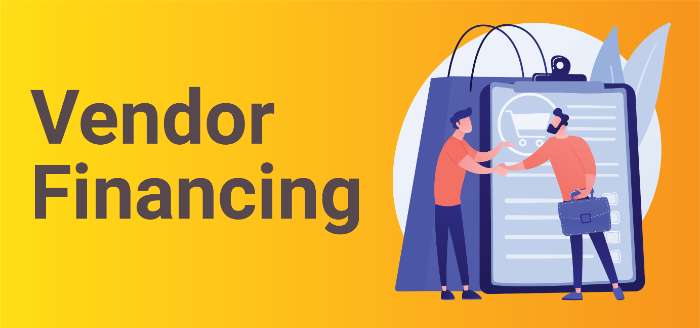
Vendor financing is the lending of funds by the vendor to its customers who use these funds to buy products and services from the same vendor. Customers need not pay for the products upfront when buying the goods but after the sale of the product. The vendor gives a credit line to its customer based on their rapport and goodwill to pay for the products and services after a certain period of time.
TYPES OF VENDOR FINANCING
1. Equity Financing:
In equity financing, the borrower receives the products and services in exchange for the agreed stocks. Since the vendor is paid in stocks (at a particular time or upfront), the borrower need not pay any money for the transaction to the supplier. The vendor becomes the shareholder and will start getting the dividends. The vendor will also make a significant decision in the borrowing company as he is also the owner of the borrower company to the extent of the number of shares held.
2. Debt Financing:
The borrower receives the products and services in debt financing at a sales price but with a prefixed and agreed interest rate. The lender will earn this interest when the borrower pays the instalments. If the borrower defaults, he is marked as the defaulter and the loan is taken as bad debt.
BENEFITS
- The vendor earns interest income on the outstanding funds with the borrower. This income is usually higher than other banks or financial institutions.
- The sales of vendors increases by a significant amount.
- Borrower provides stocks to the vendor. In simpler words, it is offering partial ownership of the entity.
- The relationship with the borrower and vendor improves with better understanding.
- The procurement for the borrower becomes flexible and smooth and need not go in search of the lender to finance the deal.
- The purchaser can buy goods that otherwise they can’t afford due to limitations on finances.
- The cash flow of the borrower is eased as they have fixed the payment outflows for the next few years to come.
Some vendors also facilitate leasing out for borrowers first. This mitigates full payment and at the same time is very tax effective.
DOWNSIDES
- Vendor has to take the default risk. If the borrower defaults and does not make the payment, the vendor’s profitability will be hit.
- The important reason a borrower opts for vendor financing is because of the liquidity crunch. Providing loans to such firms can lead to payment default and the loan being counted as bad debt in the vendor books.
- The vendor charges a higher interest than the normal banks for the borrower when they know the borrower has very limited options to sales financing.
- Agent companies find the vendors to finance for companies falling under the blue chip category. For the services, these agents charge a hefty commission that is an expense for the vendor’s lending company. Sometimes they charge borrowers also.
- The stocks received by the vendor in equity financing can be of no use or value if the borrower company goes bankrupt and moves to liquidation.
- In a recession phase or a phase where a company is not performing well, it usually opts to go for vendor financing to solve the cash and liquidity problems and assist their cause with working capital management.
THE CRUX
Vendor financing is a brilliant feature in business that a customer and vendor company can make the most out of. The borrower can benefit from it in case of a liquidity crunch and the lender can lend to earn some income through interest charged on the customers.
The vendor must make sure before availing this option and take the risk of default in payment or worst case scenarios such as liquidation. Hence, it is both a bane and a boon in the business, which should be executed with utmost caution and only upon requirement under critical conditions. If the transaction runs smoothly, this type of financing will only improve the relationship between a borrower and the vendor.